Introduction
Volunteering with animals is very rewarding, but the work can be quite physically demanding at times. We need people who are both reliable and dependable, who are willing to turn up early when a shift has been agreed and work hard outside in all weathers. It doesn’t matter how cold and wet the day is, our animals rely on us to care for them no matter what. If a volunteer doesn’t show up, the work still needs to be completed.
Volunteers are required to go through an induction and training programme which takes time and effort from our longer serving volunteering team, therefore we can only accept people who are able to commit to regular morning shifts for the longer term, not just for a few weeks.
Our volunteers aim to complete a morning shift a week, arriving around 7-8am and finishing around midday, we need people to be with us for at least 2 hours. Each morning our volunteers work in small teams of 2 or 3.
Although we require volunteers on weekends, we are currently giving priority to people who can offer regular weekday mornings.
In return you will enjoy your time with us, amongst like-minded friends and amazing animals. Whilst it is hard work, this is a great opportunity to get involved with so many animal species.
We have a volunteer room with toilet where our team can have a break, clean up and make a drink. Our volunteers often make great friends with the animal characters we have and like-minded volunteers.
Typical Day
| Typical Time | Typical Activities |
|---|---|
| First Light | 1. Poultry are let out and checked. 2. The pigs, cows, horses, goats, sheep etc are fed and checked. |
| 8am – 12:00 am | 3. We clean the stable yard by shovelling animal poo into a wheelbarrow. 4. The stables are all mucked out, we removed the poo and wet straw, put fresh straw in and sweep. 5. The stable yard is swept clean and washed. 6. Fill the hay feeders with bales of fresh hay. 7. Clean out the rabbits and Guinea pigs, give them fresh bedding, lots of hay, feed them and give them fresh water. 8. Clean out the bird aviaries, fill up feeders and wash, fill water troughs. 9. Clean out the poultry, give fresh bedding, feed and water. 10. Using a wheelbarrow and scoop, poo pick the main fields. |
| Dusk | Poultry locked up. |
Essentials
Our animal friends depend on us volunteers, we don’t have staff and so the qualities that are essential to volunteering with us are as follows;
Reliability – If a volunteer is absent on an agreed shift, this puts a lot of pressure on other volunteers on shift as the animals still need to be cared for. We understand that sometimes there are good reasons why people can’t attend when they said they would, but we do need people to do their best to show up when agreed. It doesn’t matter how hard it’s raining or the wind is blowing, we still need to clean out, check and feed all of the animals in our care.
Age – We have a lot of large free ranging animals such as horses and cattle, we are not therefore able to offer volunteer places to persons under 16, other than organised School Work Experience.
Supervision – As we are run solely by volunteers, we can only provide supervision during the induction and initial familiarisation process. For any volunteers who require ongoing support and / or supervision, such as from a guardian or carer, the person providing such support is also required to complete our induction process and provide ongoing support throughout any volunteering.
Medical Fitness – The activities are moderate, you’ll be moving animal bedding in wheelbarrows, occasionally carrying sacks of feed etc. You don’t need to be super fit, you can take activities at your own pace, it’s not a race. As long as your relatively mobile and fit, it’s an enjoyable way to help exercise.
We do not want people to put themselves at risk. If you have any concerns about your medical fitness to do physical work and be with animals, please seek advice from your GP prior to applying.
If you would like to speak to a Trustee in private to discuss any medical issues or concerns we need to be aware of, this can be arranged. We will do all that we can to accommodate you, without putting yourself or others at risk.
Experience – We are not specifically looking for people with experience of handling or caring for animals, but you do need to be comfortable around them, small, wild and very large. We need people who are not put off by hard, mucky work and who are enthusiastic and reliable.
Clothing – You need to come dressed appropriately for the weather and the likely tasks, generally you will get dirty, so bring your scruffs, Wellington boots and waterproofs.
Questions and Answers
Q. What age do I need to be?
Other than organised School Work Placements (by arrangement) the minimum age for volunteering is 16.
Q. Do you offer apprenticeships or paid work?
Everyone at the sanctuary is an unpaid volunteer, we do not employ any staff.
Q. Do you offer places for Duke of Edinburgh?
Unfortunately we are not able to offer volunteering places for DoE.
Q. Can I volunteer in the wildlife hospital?
Working with wildlife in our hospital requires a lot of additional supervision and training and therefore we are only able to offer volunteering opportunities to persons with existing wildlife rehabilitation experience or our existing volunteers, that have been with us for sometime and proved themselves to be reliable and regular.
Q. Do you offer free accommodation?
We do not provide accommodation for volunteers.
Q. Can I volunteer if I have a health condition?
We try to be as accommodating as we can. Should you have any concerns regarding any medical conditions, we recommend that you first seek medial advice. If any condition restricts what you can do, you can request to talk privately with a Trustee regarding any questions, concerns or limitations, we aim to accommodate, where we are not putting others animals at risk.
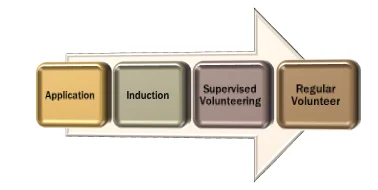
Application Process
As the sanctuary has such a variety of different animals all having varying needs, volunteers need to have a minimum level of experience gained over several weeks of volunteering, before they can be left unsupervised. As volunteers gain experience and our confidence, we can reduce the supervision accordingly.
Please read this page to be sure volunteering with us is right for you and that you meet the criteria. It can take up to 1 month for us to review applications
- Start by completing our online Volunteer application form.
- Once an opportunity becomes available, we will give you access on-line to our volunteering handbooks which you will need to read thoroughly.
- We will invited to a the next new volunteers induction, these are generally held once a month and they last about an hour. We invite a handful of new volunteers to each induction. At the induction we will go through the volunteer handbooks to ensure you have understood them and answerer any questions you might have.
- You can then volunteer, initially you have shifts where you can work closely with one of our experienced volunteers, until you are familiar with routines, then your volunteering shifts can be more flexible.